Menu
Call Us Today For A
FREE Consultation

A serious disability can create challenges that affect nearly every part of daily life. Medical limitations, lost income, financial uncertainty, and the inability to work can leave individuals and families searching for answers about available benefits and long-term support.
Social Security Disability programs are designed to provide financial assistance to qualifying individuals who can no longer work due to a disabling medical condition or who meet specific financial eligibility requirements. Unfortunately, the process is often more complicated than many people expect.
Applications frequently require extensive medical records, employment history information, financial documentation, and detailed evidence supporting eligibility. Even legitimate claims may be delayed or denied during the review process.
Whether pursuing Social Security Disability Insurance (SSDI) benefits under Title II or Supplemental Security Income (SSI) benefits under Title XVI, understanding the process and available options can be an important step toward obtaining the benefits you may qualify for.
Since 2014, Finderson Law has helped Indiana individuals understand their disability benefit options and navigate the Social Security Disability process. Our firm assists clients with applications, denials, appeals, and disability-related questions involving federal benefit programs.

Many applicants assume that having a serious medical condition automatically qualifies them for disability benefits.
Unfortunately, the Social Security Administration evaluates far more than a diagnosis alone.
Applicants may encounter:
• Insufficient medical evidence
• Missing documentation
• Work history questions
• Income and asset eligibility issues for SSI claims
• Administrative delays
• Application errors
• Failure to meet disability standards
• Appeals after denials
Many individuals become frustrated by the complexity of the process and the amount of documentation required to support a claim.
At Finderson Law, we help Indiana individuals understand their options and navigate the disability benefits process with clarity and confidence.

Every disability claim is unique. Understanding which program may apply and how eligibility requirements work is often an important part of pursuing benefits.
SSDI (Title II) • SSI (Title XVI)
Initial Applications • Supporting Documentation • Medical Evidence
Reconsideration Requests • Administrative Hearings • Appeals Process
Whether you are applying for benefits for the first time or responding to a denial, understanding your rights and available options can make an important difference.

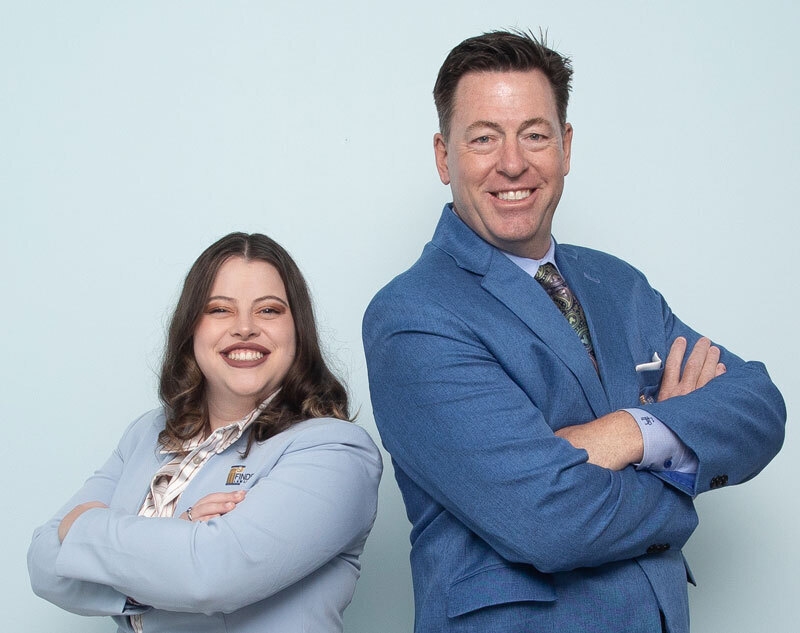
Practicing law in Indiana and Florida for over 34 years, Roger B. Finderson is a former President and current Immediate Past President of the Workers' Injury Law & Advocacy Group (WILG). He has spent decades helping individuals and families navigate Workers' Compensation, Personal Injury, Social Security Disability, Adoption, and Estate Planning matters.

Delaney Finderson focuses on Workers’ Compensation, Personal Injury, Social Security Disability, Adoption, and Estate Planning. After working for the firm for years in multiple legal support roles, Delaney became an attorney in 2024 and is licensed to practice in both Indiana and Florida. She brings a client-focused approach to helping injured workers and Indiana families navigate difficult legal situations with compassion and detail.
SSDI is generally based on work history and Social Security contributions, while SSI is primarily based on financial need and limited resources.
Many physical and mental health conditions may qualify if they significantly limit an individual's ability to work and meet Social Security requirements.
A denial does not necessarily mean the claim is over. Applicants may have options to appeal a denied Social Security Disability claim, and additional evidence or further review may affect the outcome.
Yes, it may be possible to receive Social Security Disability and Workers' Compensation benefits at the same time. However, receiving Workers' Compensation or certain other public disability benefits may affect the amount of Social Security Disability benefits you receive. Because every situation is different, it is important to understand how the benefits may interact before making decisions about your claim.
The timeline varies depending on the claim, available documentation, and whether appeals become necessary.
The Social Security Administration considers whether a medical condition prevents you from performing substantial work and whether the condition has lasted or is expected to last for at least 12 months or result in death. The evaluation may consider your medical evidence, ability to perform past work, age, education, work experience, and ability to adjust to other work.
Title II Benefits refer to Social Security Disability Insurance (SSDI) benefits available to qualifying workers.
Title XVI Benefits refer to Supplemental Security Income (SSI) benefits available to qualifying individuals with limited income and resources.
While not required, many individuals seek legal guidance when dealing with complex applications, denials, or appeals.
Consultations are free, and disability attorney fees are generally regulated by federal law and subject to approval requirements.
Understanding disability benefits can be difficult, especially when medical conditions, financial concerns, and government requirements all intersect.
Finderson Law has helped Indiana individuals and families since 2014 navigate Social Security Disability applications, denials, appeals, and benefit questions.